
Introduction
I was about to move on from Football World Cup topics after rule improvement ideas article, but the final Spain – Argentina game demonstrated some vital issues in a hard way. Nobody asked for it, but we got a perfect model of how a football match shouldn’t look like.
I believe that the roots of a good deal of what happened lies in the current penalty cards system rules. If we apply a „game theory” analysis of how all actors: players and referee should behave in this system to maximize gains, pretty much everything can be derived and understood clearly.
I put „game theory” in quotation marks in the introdution, because that’s just a basic level of finding intentions and strategies which give most gain, without any complex interactions or optimization as done in real, mathematical game theory. Admittedly I got inspired by Predictive History channel on YT, where such type of analysis makes the content attractive and thought provoking in spite of going quite often too far (to the land of absolute bullshit).
Penalty Cards - Origins
I was a bit surprised to learn that Penalty Cards (or „Traffic Lights”) system, which feels like being there forever, was in fact only inspired by 1966 World Cup „miscommunications” in the England – Argentina Quarterfinals game (wiki). The Argentine captain Antonio Rattín refused to leave the pitch. I can’t stop myself to quote his bio on Wikipedia here:
„It was in the quarter-final match against the host team that Rattín was sent off by the German referee Rudolf Kreitlein for “violence of the tongue”, despite the referee speaking no Spanish. Rattín was so incensed with the decision, believing the referee to be biased in favour of England, that he initially refused to leave. As a way to show his disgust, he sat on the red carpet which was exclusively for the Queen to walk on. He eventually had to be escorted from the field by two policemen and as a final sign of disgust he wrinkled a British pennant before he was escorted out.”
Here is a short documentary reflecting on this event on FIFA yt channel, including Rattín’s own memories.
First introduced in the 1970 World Cup in Mexico, the system is 4 years younger than the one and only instance of football coming home (i.e. England’s World Cup win). Card system wasn’t as codified as today and just helped referees to communicate their actions to the spectators and players while overcoming the language barrier. Yellow card equaled warning, red card = send off. From experience and comparison of different yellow / red card incidents, the Laws of the Game evolved to give referees a guidance of how different fouls and misconducts should be punished. Just as in 1970 though, the referee is not a machine and has a lot of freedom on how to interpret and penalize different offences. A point of reference in the rules which I would reference most would be yellow card conditions on IFAB website.
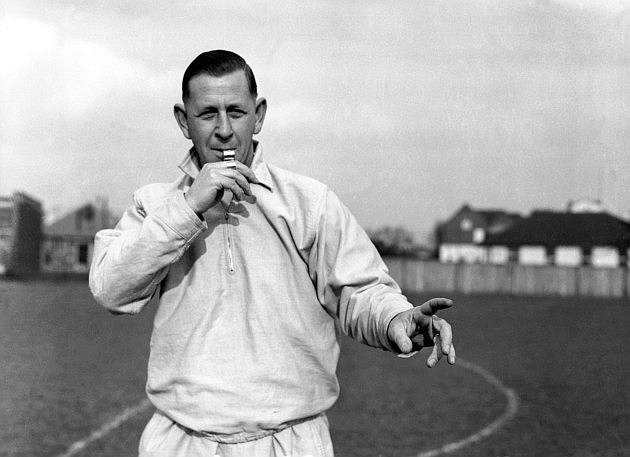
(source of image)
So 60 years ago it was Argentina involved in a major change to refereeing… maybe the bell of the history has rang again this year?
Penalty Cards And Foul Play - Game Theory Analysis
Let’s assume the objective for the players is a positive match result and the referee minds mostly own career. Then:
- The referee takes care to strictly obey the rules of the game as this part is assessed by supervisors the most.
- The referee prefers to be unnoticed in the game, therefore avoids giving cards unless clear from the rules, general practice or unwritten supervisor’s recommendations.
- Therefore the lowest penalty allowed by the rules for a given offence is the common line.
- Players are free to commit a few fouls during the game if below the yellow card threshold. If such fouls are tactically beneficial, players are supposed to commit them everytime. The rules say that continous fouls may be punished with a yellow card, but this rule is very weak and arbitrary, also unclear on whether a single player is meant or team as a whole when it comes to repeated offences.
- If a yellow card worth foul is tactically beneficial, then the player is supposed to commit it unless 1) the risk of 2nd yellow would be more impactful than short term benefit 2) long term disciplinary penalty is more important than the match result. Note that 1) is also alleviated by substitutions. Almost everytime tactically beneficial yellow card foul would be commited.
- The freezing effect of a yellow card deceases with the match time; very late into the match the risk of 2nd yellow is marginal, so why not to get 1st?
- The red card worth foul which is tactically benefitial would be rare, for example 1) A foul from the rear to stop before the box a striker going for a one-on-one with the goalkeeper (still, sometimes its penalized with yellow rather than red); 2) Denying a 100% goal chance in the box in favor of a penalty.
- Penalty kick is converted into goal in ~75% of cases, direct free kick in about 7% (cool analysis of the best fk takers on soccerment). Players are discentivized to commit any foul in the box in an abrupt way.
- A free kick rather than continued play is most benefitial when there is a lot of free space for the opposing offensive players. It usually happens during fast attack or at the moment opponent seizes the ball. These common situations are the main opportunities for tactical fouls.
- Other foul benefits are possible too, including straight up injurying opposing players.
- Fouls can take a part in time wasting; the side which wants to score goals would often avoid comitting fouls and sometimes also avoid being fouled.
From the analysis above we can see how the matches are predicted to look like. Foul play is an element of the game, players by default not commiting fouls are not fully efficient for the team. Unless the referee actively (by the interpretation of the rules) tries to give the match a good flow, rules alone are not enough to stop the match from being full of „below yellow” level fouls, especially tactical ones. Without outside of the single game context of the disciplinary bans, the match is supposed to end with a good amount of yellow cards as those are almost costless and can bring benefits to the team. A match without active referee role and a bit of altruistic fair play amongst players would be ugly and full of interrputions if both sides try hard for the best result.
The WC 2026 Final and Third Place Match
Argentina – Spain World Cup Final is a perfect example. The referee sets the foul play tolerance by the first decisions made in the game. By allowing reckless challenges, Slavko Vinčić set the bar of how the match is allowed to look like. If a tackle like Alexis Mac Allister’s on Dani Olmo in the 15th minute is unpunished, then similar fouls from both sides would supposedly be tolerated or the referee comes out as biased / inconsistent.
NI AMARILLA A MAC ALLISTER QUE HA PODIDO MANDAR AL HOSPITAL A OLMO pic.twitter.com/AooFK0iPOw https://t.co/VtRQvrwTvL
— AtletionTop (@AtletiOnTop) July 19, 2026
We ended up with one of the most disgusting matches of the World Cup, absolutely disgraceful for a Final, which is supposed to promote the beautiful game to the world. Hard to be very surprised though, as I analyzed in the game theory part, referee has an interest to take the low of what the football rules allow them to do. How many referess would give a „reckless challenge” yellow in the 2nd minute of the game (McAllister foul was 15th minute, but let’s go to a boundary case)? How many would give a double yellow into red up to 30th minute? Another circumstance was of course Argentina being the dirtiest and most win-at-all-cost focused team of the tournament, the closest possible to the game theory model. As there was no way to achieve positive score by football means, even fake mouth covering accusation was tried:
Messi ile Cucurella arasında geçen diyalog:
— EPL Günlükleri (@EPL_Gunlukleri) July 21, 2026
🗣️Cucurella: “Sen iyi misin Leo, özür dilerim.”
🗣️Messi: “Hey, ağzını kapattı.”
🗣️Cucurella: “Hadi ama Leo, bu iş ciddiye binmesin.”pic.twitter.com/7p4sKhzeN0
If we remove the win as the sole objective in our game theory analysis and instead put in for example avoiding an injury or having fun, then suddenly the game would look very different even without active referee. Take as example the 3rd place match between England and France which ended up in 6-4 score in which both sides weren’t 100% tryharding for the win and gave a chance to reserve players. 13+7=20 fouls in 90 minutes compared with 21+24 = 45 in 120 in Spain vs Argentina. Scaling to 90 minutes: 3/4*45 ~= 33; 13 fouls more. No penalty cards. Not every match of this kind will end with 10 goals of course – sometimes players wouldn’t even care enough to attack, but the discipline and flow are much better.
Intended and Unintended Fouls – A Caution
The considerations above dealt with fully conscious and premeditated fouls. In reality, unintended fouls also happen quite often – being a second too late with a tackle, stepping on opponent’s foot… The only way to avoid such contacts is an extremely cautious stance without real fight for the ball. For this reason the rules of football cannot be too harsh, or the matches suddenly become decided by random events.
The line between intended and unintended is not that clear even from the perpetrator perspective. Many challenges are intended to stop the opponent above all – player doesn’t explicitly have a foul in mind, but picks the tool which achieves this purpose no matter if the play ends up being legal or not. For example a tackle is targetted on the ball, but done in a way to trip down the opponent no matter if clean or not. A good referee should be able to assess such situations.
How Ideal Disciplinary Should Look Like?
In an ideal world the players play for a win, but are too afraid to make any intended fouls, while not overpunished for those unintended. The match goes smoothly with a low number of offences, the effective playtime is higher and more goals are scored.
Pulling Shirt / Grabbing
The first step is to detect the intended fouls, the second – punish those severely. Here is something which I don’t really understand, because some types of intended fouls are really easy to call, but allowed to some extent, sometimes more than less clear offences. I mean in the first order pulling the shirt and in the second order grabbing opponent with the palm. You can’t pull opponent’s shirt or get a hand grip on their limbs or waist by accident. These not being directly punished is equivalent to approve intended fouls as a way to win a football game. Or maybe that’s a way to balance the game so that faster players have less advantage? If we can give a straight red for covering mouth, why can’t we give at least a straight yellow for pulling the shirt? It would instantly become a niche rather than common offense.
Tactical Fouls
Probably there are some other examples of foul types as clearly intended as the two mentioned above, but let’s move to tactical benefit grounds. The punishment for a tactical foul should be at least as high as continued action vs free kick benefit. Generally yellow card tactical fouls are recognized by referees and rules („stops or interferes with a promising attack(…)”), but at an intermediate stage of an offensive action. What very often happened at 2026 World Cup is a premeditated foul on the defender who seized the ball to prevent the counterattack immediately before it develops. If such fouls are unpunished, then the match completely loses its flow. Yet it would be hard to distinguish intended and unintended foul oftentimes as instant, aggressive pressing is natural in such position also for fair players.
What in my opinion should be taken into account is whether the attack is oriented to stop the player or just seize the ball. For the former a punishment definitely needs to be considered, including a yellow card. Maybe some specific penalty, lower than yellow card and concentrated on improving match flow should be introduced for similar cases to make referee’s options richer.
Also note that in spite of yellow card penalty, tactical foul opportunities to „stop promising attack” are still commonly taken and offenders are even praised by commentators and analysts for a mature decision. It means that a yellow card is not enough, while a red card according to common opinion is too much. It suggests that a penalty between yellow and red level can be handy to make players think twice before foul. As the foul is made to avoid losing a goal, the penalty should help the attackers to score.
New Penalty Cards Ideas
Based on the considerations above I have two ideas for new penalty cards:
– „White Card” ⬜ – if the team fouls in the next X minutes, the penalty would be equal at least to a yellow card. X is fixed; optimal number would come from practice, something between 3 and 5 minutes perhaps.
– „Orange Card” 🟧 – a yellow card which also timeouts a player for X minutes. X is fixed; optimal number would come from practice, something between 7 and 10 minutes perhaps.
⬜ White Card typical uses would be:
- When a team starts to foul too much at the level below yellow card condition. It gives a clear signal to the team to stop and to the audience that the team was warned.
- When the referee assess a foul below yellow card threshold as likely intended for tactical reasons, but not 100% sure. Similar interruption of the attacking team after a free kick becomes less likely in the next minutes.
🟧 Orange Card typical uses would be:
- Tactical foul below red level, but enough for a yellow. One player less on the pitch would help the attacking side to find more space.
- A foul which is between red and yellow according to the rules and the referee wants to ensure a direct punishment without pulling out the red card. May often happen in the early game.
- Clearly intended or yellow level foul in the White Card time.
- Late game „lol, I don’t care about getting a yellow” situations.
Mid-conversion Set Pieces – MLS Style „Duel Kick”?
I predict that Orange Card still wouldn’t be enough to stop tactical fouls outside of the box though (nor even a red card is especially in the late game). This could be done only with even more severe punishment or by introducing a new set piece with a conversion rate between penalty kick (~75%) and a free kick (~7%; exact value depends on the position on the pitch).
What comes to my mind are the old MLS style 35-yard penalties. To quote the linked article: „Over the four years the shootout was employed, attempts were converted approximately 45% of the time; for the sake of comparison, traditional penalties in MLS play from 1996-2000 were converted at a rate of about 70%”. 35-yard penalty is basically a one-on-one duel with some space for extra rules which can decrease the scorer chances, like time limit, only one shot allowed, keeper touching ball = over, or running away from the goal forbidden.
Let’s call it a „duel kick” (dk). Duel kick would be introduced for the very clear situations of intended fouls commited outside of the box on the defender’s side of the pitch against a player who is certain to get a one-on-one opportunity or extremely likely to score the goal (e.g. tripping a player before shot on an empty goal). Duel kick is always performed by the fouled player himself. A gentlemen way of settling the things! (making the offender pick up the gloves is probably a step too far though ;-))
DK should be given rarely. If DK works well I think it can be handy enough for the referees to use it also in some other situations – for example those where penalty kick stems from the rules but feels too harsh as the foul is clearly unintended. I think here about some handballs or situations similar to Digne vs Yamal in the Spain – France semifinal, where the fouled player is simply overlooked.
Here's the challenge by Lucas Digne on Lamine Yamal that won Spain a penalty. I think it was a Yamal handball first. Was the referee right? 🤔 pic.twitter.com/lb7cYoRfRL
— RiichGod 🌙 NasaBoyy 👨🏽🚀🫡 (@NasaBoyy) July 15, 2026
The DK idea is for sure the most controversial one out of those presented in the article. Don’t treat it as essential; also that’s just one example of a possbile mid conversion rate set piece – the idea itself is more important. I’d love to see it someday nevertheless, as the form is quite epic and old schooled and I wonder how very top players would approach those!
Revisiting Game Theory With New Penalties
Let’s now include all the ideas in the game theory analysis and see how it changed:
- The referee habits wouldn’t change much, but they would have more tools at hands and therefore more expectations from the audience to keep the flow of the game well.
- White Card is a loss function to excessive fouls below yellow card level, because being forced to avoid fouls after a White Card temporarily lowers team defensive performance. It alone would often outweigh tactical benefits of intended mild fouls.
- Yellow Card behaviour of players wouldn’t change much but for the threat of getting an Orange Card; referee has more freedom to pick between Orange and Yellow depending on the situation compared with the Red as the only alternative. Players would have to be more cautious.
- The recommendation to use Orange instead of Yellow in some situations when late in the game would discentivize players with clean disciplinary account to attempt fouls at this stage.
- Because of the double penalty: Card + Duel Kick, tactical fouls on own half to prevent one-on-one situations would be rare. On average the chances to concede would be roughly equal to the continued play.
- The referee has to be aware because it (along with White and Orange cards) makes diving more benefitial – the rules of the game need to be executed for divers, or there may be too many attempts.
- Compared with the current state of the game, faster players should perform relatively better due to shirt pulling / grabbing disallowed as well as Duel Kicks. It could make defensive lines go a bit lower.
Closure
Hope you enjoyed the read. Let me know what do you think about my “game theory” analysis and presented ideas. Maybe you have your own solutions?
If some of my reasonings and suggestions resonated hard with you, let’s try to make them happen!
Vamos,
lerio2