
Introduction
Football World Cup 2026 is the biggest event of its kind in the history with a total of 104 international matches. For an enjoyer of the beautiful game who doesn’t follow matches on a weekly basis unless broadcasted in the public channels that’s a huge bomb of modern gameplay experience. No wonder there is a lot of confusion amongst viewers when it comes to modern football rules and many internet media and influencers heat up controversies to get more engagement and reach…
In this article I would like to share with you some problems I observed and ideas of changes which in my opinion would make high level football gameplay more clear and entertaining to watch. Many observations and ideas come from discussions with other fans in Gwint Pro Polska discord, where I also learned a lot I wasn’t aware of.
I’d like to bring your attention especially to Exclusive Goal Area idea presented in the article, which I came up with and which I haven’t seen brought up yet. Maybe there is a basic flaw I don’t see?
1. Goalkeeper Interruption During Set Pieces
Set Pieces, especially corner kicks are often disgusting to watch because of the amount of physical fight involved. Foul play is common, the line between events worth a whistle and not is rather blur, especially when both sides are not playing fair.
On top of outfield players hand-to-hand combat, a special place on the disgust scale for me holds goalkeeper interruption. It ranks from blocking the keeper path towards ball or screening the sight, through physical contest in the air, up to pulling the shirt and releasing in the right moment.
These situations are not only unesthetical and bad sport (imagine kids on a playground mimicking professional footballers here), but often very hard to interpret. There was a couple of such close calls and ugly goals in WC 2026. The most remembered one is Jonathan Tah goal from corner kick, which got disallowed after VAR check-out due to German player Anton holding Paraguay goalkeeper Gill.
germany goal was disallowed for this 😭😭 pic.twitter.com/oyJ1swovmn
— Taxx (@taxxfcb) June 29, 2026
Finally Germany lost the game against Paraguay in the penalty shootout. If the referee supported with VAR made a different decision, likely Germans would have won in an ugly way. Paraguay’s GK was praised for going down after contact with Anton, which made it easier to interpret the situation as a foul.
Yet oftentimes goals scored after goalkeeper interruption are not ruled out and the tactic is employed on regular basis by some teams. For example in the most recent England vs Norway QF game on WC2026 we have seen one Norwegian player sticking to goalkeeper as a part of corner routine. I’ve watched a few of Premier League highlights with goals scored such way. Here is first example I’ve refound:
We’ve seen similar tactic tried in the most recent Argentina – England semi-final match as well, where referee talked to both players, just to allow goalkeeper interruption next after all (foul wasn’t called).
#FanáticosPlus | Cara a cara: Simeone y Pickford protagonizan un duelo que promete emociones. 👀⚽ pic.twitter.com/5pWgGXsGsZ
— Fanáticos + (@FanaticosGMV) July 16, 2026
Idea: Narrow, Exclusive Goal Area
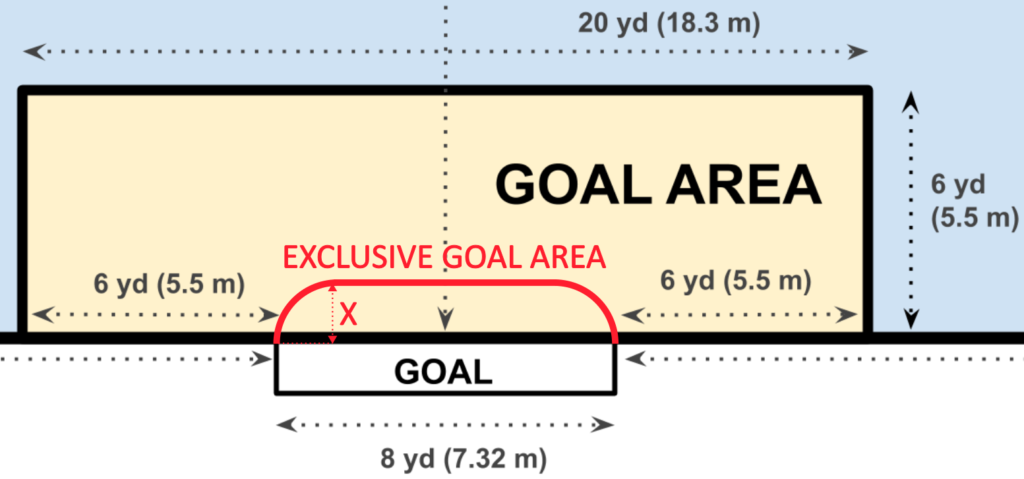
As goalkeeper being “untouchable” in the goal area is so open for referee judgement and even without any gk interruption corner goals are oftentimes random, ugly and resulting in injuries, I suggest to add a very narrow area in front of goal which is almost exclusive for players of the defending team:
- Narrow field in front of the goal – the exact dimensions would come from football practice, perhaps X=~1.5m should be about right. Let’s name it Exclusive Goal Area (EGA).
- No player from the attacking team can cross the line till the ball is played.
- When the ball is played into EGA, only one player who attacks the ball can come inside.
- If the ball is passed by a player who is already in EGA, there is a rebound or opposing team player controls the ball in the EGA, more attackers are allowed to come in.
- EGA would obey for free-kicks as well and maybe even normal play.
This way goalkeeper should be free to move along the goal line and take first steps to run forward. Block of the path towards the ball or screening goalie view is still possible, but not to extreme extent.
EGA with optimized X should give keeper just enough freedom, while fair attacking strategies should suffer as little as possible and goals ruled out due to players unintentionally crossing the line should be negligible. For this reason probably EGA corners should be rounded – an arc with radius equal to X.

2. Automated VAR For Crucial Events
The way VAR = Video Assistant Referee operates is confusing for many viewers. A newcomer would expect VAR to be used in any controversial situation, while in order to keep the game fluid the rules state explicitly in what cases VAR is used (source):
- Goal/no goal – attacking team commits an offence, ball out of play, ball entering goal, offside, handball, offences and encroachment during penalty kicks.
- Penalty/no penalty – attacking team commits an offence, ball out of play, location of offence, incorrect awarding, offence not penalised.
- Direct red card – denial of obvious goal-scoring opportunity, serious foul play, violent conduct/biting/spitting, using offensive/insulting/abusive language or gestures.
- Mistaken identity in awarding a red or yellow card.
- Clearly incorrectly awarded corner kick if the decision can be changed immediately and without delaying the restart (competition option)
On top of that, to rule out a goal the foul must occur in the same action in which the goal was scored (“Attacking Phase of Play” (APP)). Therefore this goal for Egypt could have been VARed:
This angle of that Egypt disallowed goal, I don’t still understand how this is a foulpic.twitter.com/d1rYSg9X9X https://t.co/Z1ICjQHVTV
— AB⚕ (@AbsoluteBruno) July 7, 2026
While the France goal against Morocco, where they benefited from Rabiot’s handball, but lost possession later for a while not. It is clear that if the referee called the handball, Morocco got a free kick and time to position players higher up in the field to deal with pressing, the goal wouldn’t have happened, at least not that soon. Harsh rules, not VAR fault.
Egypt goal against Argentina should have been allowed in my opinion based on what follows. The referee + VAR decision was correct according to the rules, but apparently a very similar situation happened earlier in the tournament in Argentina vs Austria match. Based on the leaks from Polish TV referee expert Rafał Rostkowski (can’t find other source via browser), the foul was confirmed, but the goal got allowed nevertheless because spirit of the game matters more than strict rules – the foul happened far from the goal and Austria had time to interrupt Argentinian attack. If so, then Zico’s goal should have been allowed as well or there is a huge inconsistency between two interpretations in the same tournament.
Cuando Argentina jugó contra Austria hubo una falta en la jugada previa, pero Messi igual marcó el gol y el VAR no lo anuló.
— Valy 🎩🎭 (@liderfiscal) July 7, 2026
Pero el VAR anula el gol para Egipto. Esto es corrupción por parte de la FIFA. Comparen 👇👇👇👇👇 pic.twitter.com/5Lp8oDh3gc
If you think more about Egypt’s goal, there is a ton of paradoxes. If the amazing Haissem Hassan (12) run was interrupted, the ball recovered and goal scored later, the foul on Martinez (6) would have never been VARed. If the shot was missed somehow (unlikely, but football seen worse aiming issues), Egypt would have been in a better spot as a goal kick is less threatening than a free kick close to the side of the box. They basically got punished for the counter attack being too flawless.
All things considered the rules imo would have worked best in the game’s spirit if:
- Foul on Martinez can be instantly called with VAR support,
- Or the goal for Egypt is simply allowed.
VAR decisions usually attract most attention from the viewers, but a biased referee typically would push a team by other means. Most duels in football are on the verge of a foul and its enough to just let one side be more aggressive without punishment.
Idea: Rewind Time Limit & Free Challenge
There is probably no perfect solution as the way VAR works is already a compromise between “justice” and “flow” of the game. Improving one would be at expense of the other to some extent.
The biggest advantage attacker can achieve by foul play is a clean score opportunity. This would arise for example when a defender is aggressively pressed, forward seizes the ball and gets one-on-one with the goalkeeper. The time between foul play and score opportunity is rather short or otherwise defenders would manage to return and disturb the forward. Note that at full sprint pro footballers should be able to beat the full football pitch in less than 15s; unless they try to seize the ball on the path, they should be able to return to deep defense if the attacking team didn’t shoot yet.
According to my rough calculations from vod, 18 seconds elapsed from foul on Martinez to goal by Zico. Introducing a goal rewind time limit of let’s say 15 seconds would improve the match flow at a little expense of “justice” and remove the inconsistency between referee decisions which we’ve seen in WC2026. Team which fouled can then on purpose elongate the attack to avoid VAR, but then they have to switch to positional attack rather than a counter or direct opportunity which arised from foul on defender. After all, its always main referee responsibility to spot the foul and VAR is only meant to verify the very gamechanging moments. Note that VAR would still work in the goal action for major incidents mentioned in the protocol; rewind time limit would obey only for fouls which would have been ignored by VAR if not in goal action.
With the rewind time limit there is an open question whether Attacking Phase of Play (APP) condition from the VAR protocol should be applied at all. I have no clear opinion in this regard – for example Mbappe goal against Morocco would have been disallowed without APP and with the time limit of 15s as Rabiot’s handball happened ~13s before goal.
From the opposite direction, an idea which can improve “justice” at a slight expense of “flow” is a free challenge (FC). VAR rules can’t be too flexible because of flow and interpretation space reasons and therefore key referee errors may not get corrected by VAR if they don’t belong to one of 4 categories of “serious missed incidents” from the protocol. To get more flexibilty in the system both teams can get very limited privilege to call for a VAR check on a situation which got totally missed or doesn’t belong to 4:
- Each team has one “free challenge” to call VAR.
- The call must happen immediately after the situation in question.
- The game isn’t stopped after challenge. VAR checks out the situation in the backstage and if the main referee is convinced to change decision, then the game is returned to the foul point as soon as possible. Otherwise the main referee checks the situation on screen when the ball is off play.
- For the flow reasons, the FC is not renewed even if the team was right. Moreover an incorrect use of FC is punished in some way in order to avoid situations where challenge is used by default at some point. For example an incorrect challenge can limit the number of subs.
FC then would be a kind of safety backup in case of unexpected events where the referee team cannot go beyond the rules or of a missed event which got spotted only by players. It is unlikely that much more than one such relevant situation happens during the game, therefore FC is limited for flow reasons – multiple challenges during the game in minor incidents can ruin viewer experience.
To elaborate on the example of subs penalty, it can work like:
- The pool of subs is N + K, where N is a base number and K is associated with the Free Challenge
- If FC is wrong, then K is lost
- If FC is unused, but team wants to go beyond N subs, it can be traded for K
- If FC was used correctly then it can’t be used again, but full N+K pool can be used.
There are Challenge system trials already, but meant as a cheaper alternative to VAR rather than a really free check to improve “justice” aspect flexibilty in high profile matches. I like the idea of challenge cards though – it should help to make the system more clear to viewers.
If we take Free Challenge + Goal Rewind Time Limit into the case of the disallowed Egypt goal, there are following possibilities:
- Argentina uses Free Challenge and the foul on Martinez is called during the attack or after the goal.
- Argentina doesn’t use FC because: a) doesn’t call it immediately as the ball is deep on the Egypt’s side; prefers to save FC for a more threatening situation, or unsure about the outcome, b) already used FC. Goal is allowed.
3. Late Offside Calls
I was surprised to see how late offsides are called by linesmen in WC2026. From what I understand it started with VAR. VAR may overthrow linesman decision, therefore the action is continued to see what the final outcome would be, because quite often play on is way more favored than a free kick for the attacker. Only then the flag is raised.
This procedure is very confusing for older football fans coming back to watch the World Cup who are used to immediate offside calls. Also wasting up to a minute just to go back to a free kick is a bad viewer experience.
From my viewpoint I much more liked old, immediate offside calls, at least proven that linesman is certain enough about them. According to the rules, obvious offsides are called immediately, but somehow linesmen are too cautious at times.
- Offside circumstances are often a sprint duel of an attacker with defender. If the offside isn’t called, both players would continue the fight at full speed, which can result in an injury. Moreover, expecting an offside the defending side can be more brutal than usual as offside would preceed a free kick.
- Wasting up to a minute is indeed a bad viewer experience
4. Time Added Controversies
Admittedly I don’t see that many examples of clear time wasting in WC2026 and limited time for goal kick or throw-in definitely helps in this regard. What I still find quite concering is the amount of “injury time” added by referees, which feels quite arbitrary. On one hand we have +19 minutes in Croatia – Portugal, where the referee takes into account all the events and wants to give Croatia a fair chance to fight back. On the other there are matches ending strictly at the added time even after a good chunk of offplay time.
What many fans suggest is making the matches shorter on paper, but measure only the effective time when the ball is in play. The amount of dead time in football matches is really high, the effective time varies between matches, but it’s less than 1h almost everytime.
So if the referee stops the clock during goal celebrations, medical treatment, substitutions etc. a 1h match would on average have more playtime than current 90 + added time. There would be no controversies on the amount of time added as simply there would be none, neither the decision on when exactly to end the match would feel arbitrary. Also the referee wouldn’t have to explain self for elongating the game beyond added time.
Beyond The Gameplay
The Anti-Heroes: FIFA and United States
The internet is flooded with replays and compilations which are meant to show how FIFA is a corrupted pig and a team (usually Argentina) is favored. Many of those are baits for new football viewers who are not accustomed with the rules, neither have the patience to learn these.
You don’t really need such vods to prove that FIFA is a corrupted pig though – they’ve done it themselves for example with Commercial Hydration Breaks, lifted red card for Balogun (a precedence; moreover a clear, dangerous foul even if unintended) or lack of intergrity when it comes to Somali referee expulsion or Iranian national team treatment. FIFA and United States as a host are anti-heroes of 2026 World Cup.
Remember when Iran bombed Washington without warning, killed President along with his family in the White House, proceeded to kill 3.5 k more people in mass bombing along with destruction of civilian infrastructure? Well, actually the exact reverse happened. Not only it didn’t impact WC hosting, but also US was free to mistreat Iran team and its supporters in various ways. US and FIFA share “too big to be held accountable” mentality and moreover they are probably right. Previous hosts of WC: Russia and Qatar, while hardly topping human rights charts, tried to present self as unbiased, modern and open countries.
Iran - The Uncoverers
Late Iran story in WC2026 is a kind of another “martyrdom” out of thin air – probably by accident this team suffered both from VAR “inhumane” refereeing and flaws of playoff qualification system. In my opinion the football level of the team wasn’t high enough to achieve much in the tournament, also condition was visibly lacking late in the games I watched. They put up a good fight though, not always pretty in the football terms. Two goals got disallowed in very close calls. Against Belgium there was a milimeter offside when Iran scored the goal thanks to a smart free-kick routine. VAR was required.
IRAN'S GOAL!
— RB.🚀 (@godsonlyheir) June 21, 2026
Was it Offside? 🤦♂️
While football fans say this goal was a clear goal, FIFA's VAR system disallowed Iran's goal! Iran 1-0 Belgium pic.twitter.com/xaet5bA9f5
Against Egypt the scorer was milimeters ahead of the second-last opponent – two defenders closest to the goal are counted rather than one because goalkeeper is ahead of the defensive line – a very rare case. VAR was required to call the offside.
Didn't hear Egypt Ziko say it was rigged for Egypt when Iran scored a winning goal in the 93rd but VAR intervened and waved off the goal due to a narrow offside ruling. Iran were eliminated from the group stage due to the disallowed goal. https://t.co/nXBUOi3iOr pic.twitter.com/I10bAqYclM
— urn123 (@urn1231) July 8, 2026
(because of the Polish referee Szymon Marciniak, a conspiracy theory of Jews standing behind everything, but Poles standing behind Jews got unleashed again on Twitter. Listen to me: this theory is an absolute nonsense! I laughed a lot in private meetings with Javi and Benny Milejkowski on how people come up with such stuff.)
The benefits from micro offsides in these two situations were marginal for Iranians, therefore most viewers, me included, would like to see goals like these allowed in general. Microffsides are already recognized as controversial and perhaps bad for the game; for this reason for example the idea of “daylight offside” is around and tried in the Canadian Premier League right now. It is also considerable to straight up give the referee the opporunity to allow goals if the offside benefit is low. It means a bigger grayzone of interpretation though.
Finally Iran finished at 3 points after 3 draws and had a decent chance to advance to the knockout stage, depending on the results of the upcoming matches of other teams in different groups. These aligned exactly in a way to gatekeep Iran, with Austria – Algieria 3:3 draw sparking some controversies. Draw made both teams advance to the knockout stage. Both win and draw meant 2nd place for Austria and a match against very favored Spain. Algieria preferred a draw over a win to avoid placing 2nd and matching Spain – they finished 3rd and played less favored Egypt in the Ro32. Effectively Algieria was in a better spot than Austria thanks to… worse goal difference!
48 teams And 3rd Place Competition
All blame goes to FIFA and the 3rd place tiebreaker system which enabled such a paradox along with a win-win matchfixing possibility; hard to expect teams to play against its best interest. The teams from groups which play late have information advantage over those who play early; for example if Algieria – Austria and other matches had happened first with the same result, Iran would have gone hyperoffensive against Egypt to get higher winning chances and avoid tiebreaker.
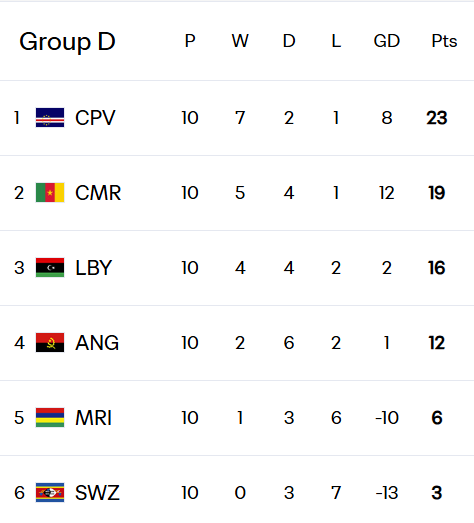
Increasing the number of teams from 32 to 48 and maybe next even to 64 as considered by FIFA has its pros and cons. It basically favors “party” mode over “competitive” – more fans engaged, more traffic in media, more promotion over the world, lower quality of average match, longer break from club trainings / shorter vacations for players, more struggle and cost for the organizers to provide the teams with the same quality training camps etc… Some argue that big surprises / discoveries like Cabo Verde were possible thanks to 48 format (10 rather than 5 slots for CAF – African Federation), but its not that clear. Cabo Verde topped their CAF qualifier group while edging out more recognized Cameroon; they were one of the best African teams before the tourney already and could have made the old 5-cut.
Personally I prefer competitive rather than party mode of the World Cup – fewer teams, higher level matches, maybe even a new format which will reward overall perfomance more than a single match and minimize match fixing possiblities. I found World Cups with 32 teams as a good enough balance between “party” and “competitive”.
The problem with finding the right format for the party mode is that the weakest teams need to play more than one game (otherwise why all this mess with arrival and accomodation rather than just a qualifier?), which means that losers cannot be dropped too early. Party mode probably also likes to see an outsider team to be matched once with a top team rather than low rated teams playing between each other to get the privilege to face a seeded opponent. So one way or another we arrive at something similar to a group phase and the drawbacks which we witnessed in WC2026. Its clear that the current system needs to be changed, but the space of improvement is very narrow when above 32 teams.
64 teams and Top2 qualified from groups maybe doesn’t have the major information advantage flaw of the current 48-team system, but competitive-wise has many issues. Don’t get delusional on more Cabo Verdes added to the tournament; instead expect a long tail of teams below those who performed worst. You can roughly visualize it as spreading current 48 teams to 16 groups and then adding one, weaker team to each group. The groups would be even more imbalanced, with 2 clear candidates to advance in most of them. There would be many instances of at least one team in a match playing for nothing after 2 rounds because of the power gap, which is generally bad in sports due to lack of motivation and possible matchfixing.
Closure
Hope you enjoyed the collection of my impressions and ideas based on Football World Cup 2026 viewer experience. I didn’t mean to make a complete summary here, just pointed a couple of things which stood out to me and probably can be improved. As I said in the introduction, I’m mainly interested about reception of my ideas as maybe I’m missing some crucial points. Really would like to hear your feedback.
If you enjoy the ideas, let’s spread them around so that they maybe become real for the good of the game. I’m not an football expert nor an active member of the community, so I acknolwedge I lack lots of information and that there are greater minds than me thinking longer on the same questions in everlasting discussions.
Vamos!
lerio2