
Introduction
After the work on Stabilism philosophy article and follow-up short „Apocalypse” detour I started to wonder on how exactly consciousness contributes to stability. The starter question from the second article is: what if a man has internal dialogue, but is unaware of it. So that a man communicates perfectly, is able to think abstractly, do math, write philosophical articles etc., but just „doesn’t see his life”. In other words the consciousness aspect which is of interest here is „awareness of awareness”
I’m again not going into a real scientifc discourse, but just use pure reasoning to start a philosophical journey. As always, don’t confuse the reasoning here with my real, personal beliefs – I just want to provoke you to think. I intentionally do not confront what will follow even with basic knowledge base like Wikipedia – just pure logic, hopefully worthwhile for thought process even if the conclusions disagree with facts.
Why Are We Aware?
What is the stability upside of us „seeing our lives”? The fact of awareness alone has no impact on real world unless combined with the decision making module. Decisions are understood broadly here – what I mean are actions taken in time, not typical yes/no dillema only. So for example in my understanding a decision is also „what to think about now”.
Note that deep awareness for example is not necessary to share our experience with others. We can see a thief and scream (direct responsiveness), but by no means we have to be deep aware of it. We can imagine unconscious man telling history of own life while seeing it only subconsciously. Even give life advice based on it.
Why Conscious Decision Making?
If decision making is an illusion and essentially predetermined, then we are back to the starting point, because deep awareness again makes no sense. Unless we have other idea, that’s a slight clue that human actions are not predetermined. At non-scientific, common sense level, human has a free will element because you can do completely unexplainable things if you want to.
Consciousness studies are one of science frontiers and if you’re interested in this topic beyond thought journey – jump in. This article doesn’t make use of literature, but I’d surely go for study later to see if my philosophical inference anyhow resembles reality.
If consciousness is needed for decision making, then the follow-up question is: what conscious decision making is needed for? Of course this question has to be treated on deep level: why conscious d-m would be better than „unconscious d-m”? What is the upside of „consciousness” if we can use the same moral, experience and knowledge bank in a sub-conscious way? My guess is that deep awareness is a tool to achieve irregular decision making, neither predetermined nor random. Such type of decision making is supposed to be better for the stability than the alternatives.
I also think that very likely conscious and unconscious processes are support to each other in the same way as we have paired organs. If one fails, then the second is helpful till the other recovers.
Why Evolution Promoted Deep Consciousness?
If deep consciousness development led to more stability than the improvement of other brain capabilities (i.e. raw brain potential, ability to learn deeply and memorize…), that’s an important gauge for the future. Algorithms which simply act to maximize a certain win function (sometimes with a random factor – artificial „entropy) may be less stable than we think in the long term. There is a decent likelihood that deep consciousness reinforced decision making got stability selected over simpler algorithms which worked on a better biological „hardware”.
Both high entropy algorithms, where the space of possible actions was huge, and low-entropy, „just choose most likely answer” algorithms somehow failed. The former might be better in the long term, but the probability to hit the right path isn’t high enough. The latter could be much better and safer in the short term, but probably slows down the evolution process, makes the population too homogenous and hence prone to mass effects.
An important caution here is that deep consciousness doesn’t have to be favored by stability selection in a general case. That’s because it has to arise for us to describe the world. We could imagine 100 alternative Earths where other path was preferred, yet even if we were one of humanoids on such a planet, we wouldn’t be aware of it. The phenomenon of deep consciousness must arise for us to become an observer, but doesn’t have to be dominant in the given world; other paths could happen simultanously.
If we don’t see other paths in the present or the past (e.g. more intelligent homo, but less conscious), it may suggest that deep consciousness is coupled with brain raw potential and in a sense needed for the progress of this potential.
Way Back Or What Is Deep Consciousness?
Let’s now repeat and extend the crucial points on my logic path:
Deep consciousness is meaningless unless supports decision making.
If one can make decisions based on deep consciousness, then there is some agenda, these decisions are not fully predetermined. Otherwise basic awareness is enough and „awareness of awareness” isn’t needed.
And those points lead me to following picture of what the deep consciousness is:
Response systems got developed in the early stages of stability selection. Organisms which developed receptors proven to be more stable.
Over time higher order neural systems got developed in still unconscious organisms. Memory, intelligence, communication… These again favored some animals over the other.
At some point the management of whole neural system became of higher importance for the stability of organisms than the further development of particular branches.
Homo Sapiens develops or inherits own external agent to act at information<=>action interface. The information from neural networks fuels the agent, supports decision making.
Passing information to an external agent requires the neural system to create a representation of the state of each relevant neural network. Deep consciousness is this representation! As long as the information could be processed internally, there is no reason to create a representation. For example a „temperature receptor” working internally would pass a signal through neural network and the organism would act accordingly, e.g. wear warmer clothes. The system is automatic, there is no need to create a representation. When we need to pass the information to the external agent though, a representation which it could process is needed. That’s the feeling of cold, something objectively not existing, which may persuade the agent to decide on wearing warmer clothes. Similarly, eye is sensitive to the wavelength, but the impression of color is a representation.
Yes, the agent, hosted and sustained by your organism is you („soul” if you dare). Feel free to roam around and be grateful.
There are two big questions in this picture:
How such external agent system contributes to stablility? I gave two not mutually exclusive guesses: entropy vs correctness balance and a backup feedback loop. I think you could derive more guesses still with pure logic.
How a biological system which resembles „free will” to some extent could be developed? What is the algorithm, how does it exactly work? These questions are beyond my imagination as of now, but it doesn’t mean impossibility.
Agent Also Evolves
Note that „soul” in this picture most likely is not invariant between generations and could also differ in details between people. As a relatively new feature it probably evolves faster than other parts. The shape and capabilities of the agent are not constant, there are variable weights and space to roam around for the agent and those are stability selected in the evolution process (maybe also developed during upbringing?). Soul from the days of Plato probably differs a bit from the soul of a modern human. Similar algorithm, but different weights.
I think maybe we are at the „training phase” of a machine learning algorithm – the new feature is getting optimized and there is a lot of freedom to explore the space of possible setups. Then maybe deep consciousness gets dropped and the optimized agent becomes internal part of the system again for more speed and efficiency. Instant movement to the internal mode apparently wasn’t possible without what we see now, it was perhaps unstable. The state of constant optimization with this weird agent mechanism is paradoxally more stable.
Are You Smart?
What is thinking? Agent activating specific parts of the neural system. What is a thought? A reperesentation of information in this neural system.
Agent itself is neither smart nor dumb. Either the proper answers are there in the neural system or not, agent can’t create anything. I remember one Polish chess grandmaster asked about how to develop the vision of the chessboard without seeing it. He answered more or less: „I don’t know, I play chess since 5, I just see it”. You can’t voluntarily start to visualize the chessboard if the networks are not already trained. As a late chess player you may struggle to ever achieve this perk.
So the agent can’t impact the present much when it comes to problem solving, which is very annoying at times and contributes to the vision of determinism and grounded socio-intellectual hierarchy.
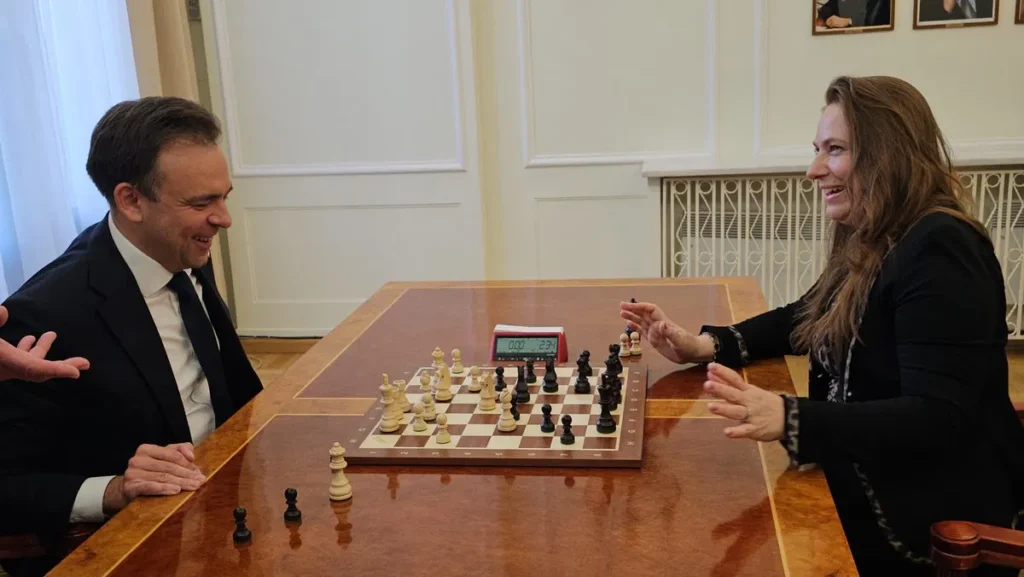
Yet it can impact the future when we decide on what to learn. Thanks to decisions made 10 years before, our neural network can work well enough in a given field now. Staying in the chess examples, there is the famous case of Polgár sisters. Today’s women chess players are really professional, hard trained from early age and of course try their best in the present. Yet having a father fully obsessed with the education of his daughters into geniuses and moreover intelectually capable to develop and conduct the exact vision gave raise to a unique advantage. Judit Polgar’s 2735 elo rating is the highest achieved by a woman to this day; as of September 2026 highest rated woman currently is Yifan Hou with 2596.
Of course I don’t invite you to become modern day László Polgár, especially without pedagogical knowledge and talent. Primum non nocere is the golden rule for Stabilism and vital when it comes to neural networks. First: don’t damage them. Rest is important and specialization is also a way to avoid overload. Remember Daniel Naroditsky.
Education And High Retention Networks
From some point a well developed network becomes easier to sustain; the embedment of each element in the structure and crosslinking is so deep that the loss of information is rare. Think of chess players able to visualize the board. They can effectively live chess all day, come up with new strategies, look back to own games or classics, validate variants. That’s a stable structure, which could develop on with no real need of help from the outside. Development of such structures should be the purpose of education.
Chess is deep about relations (controled squares, good/bad position…) , therefore its relatively easy to build a complex neural network. On the other hand think of historical dates learned in school. How could you recover these, say that the Second Punic War began in 218BC? Tough, you’d need to know a ton of context information, immerse self in the ancient world so that you can figure out the exact year or learn it by heart somehow. It requires a lot of study. Unironically a silly mnemonic technique like „am I Hannibal(?)” = 2,1,8 could be more effective when having limited time.
To develop a self-sustainable „History” neural network able to recover important dates from every epoque, one would probably have to study more than Polgár sisters did in chess! Instead of chessboard you’d be able to visualize society and world situation in a given year, relations and motivations between classes, historical figures at a certain stage of their lives…
I think that learnability and deep embedment of information is on equal footing with its importance when it comes to education. The less time is devoted to learning, the higher must be the density of links in the information. Not only internal links of course, but also links with what we already learned and observed.
Two Robots Talk
Most things we do in time don’t even involve agent. Instead there are automatic actions, responses etc. Think of breathing. If we focus we can control breath, but outside specific circumstances its better to use agent for sth else and let the process happen automatically.
Hence as long as we don’t actively concentrate on a dialogue with the other person, the conversation would be automatic. Two different neural networks in an autoplay mode. It contributes to the impression of being the sole conscious one on the Planet… for both sides!
Soul Is A Drop Of Water
I don’t love the ambiguity of the „free will” term. The agent is obviously restrained by intrinsic weights, information coming from neural networks and own capabilities, its freedom is varied and limited, but according to my reasoning – existent.
I like to think of soul as a drop of water, which usually can’t change much (processes where agent becomes dormant or can’t override action taken), but sometimes is decisive for the balance.
Also when the drop hits in the same right place many times it can melt a stone.
Here Lies A Great Agent
Having some degree of free will means that we are generally responsible for own actions and each human is a more unique phenomenon than just a play of genes and circumstances. Our achievements are a result of natural capabilities, environment and agent actions in different proportions.
But beyond classic achievements or failures which make one’s name immortalized in Encyclopedia, we are manifesting a part of our soul to contemporaries. If we could take a record of decisions taken relative to weights provided from the deep consciousness, that would be our book of life.
Such a book along with conseqences of choices is a feed to optimize the soul. That’s one of the things we could learn from the history if done in a honest way. Understanding the background and environment of our ancestors, analyze their decisions and consqeuences, finally map it on the modern times and self.
A Voluntary Droid
Imagine that someone offers you to replace the decision making module of your brain with a perfect AI. You’re guaranteed to be a morally good guy, successful in life, find beautiful wife, live 150 years, feel all the pleasures, be respected in the society, but just have no control. Your „imperfect” decision making mechanism becomes dormant. Would you take it?
Someone offers to replace the decision making module of your brain with perfect AI. You’re guaranteed to be a good guy, successful in life, find beautiful wife/husband, live 150 years, feel all the pleasures and little harm, but just have no control on your life. Do you take it?
— lerio2 (@lerio2_pl) September 10, 2026
Note that people turning into Voluntary Droids is basically what happens now in the competitive enviroment. That’s the path to be most efficient – replacing not only deep analysis capabilities, but own slow decision making process with AI. Human decision making doesn’t give good enough results fast enough, machine is simply better in all the measurable regards. As I speculated in the previous articles, that’s one of the imaginable ways of human losing consciousness all along as obsolete.
Yet as I infered earlier in the article, maybe the human decision making got stability selected not necessarily as the „best”, but as unique, „neither deterministic nor random”. We shouldn’t take evolution, let alone stability selection, as a playground where the best players in the given game remain and the other go extinct. First, we don’t know the exact game – the fact that AI for example would be able to do „everything better than human” doesn’t mean it would be more stable. We can easily overlook some aspects; time and random events are the best test.
Notice that even if you believe that free will is an illusion etc. the provocative question from the first paragraph doesn’t vanish. Are you ready to sacrifice a relatively stable system, a result of billions years of life evolution for a new, more productive one? I’m not in favor of any of the answers, but its at least worth it to recognise that such question exists. We could easily step over that with no way back.
The loss of will means loss of any imaginable control on the future. At this point nothing matters unless its somehow regained. Human may live or not, doesn’t matter. If people become Voluntary Droids, we would lose control of own world even if machines do not explicitly destroy humankind. The gain would be higher productivity, the expense would be freedom.
Note that I don’t mean here explicitly sth like Human turned into Robots thanks to some sophisticated implants etc. Its more about sacrificing own identitiy for more efficiency on a philosophical ground. If not AI in 10y, then our own society may achieve the same by itself in 100 000y if only a certain type of human is stability selected.
Closure
I really like the outcome of my philosophical journey, hopefully it was unbiased enough. The world with relatively autonomous decision making agents is more than I expected before writing this article. It shows how fragile and unique our reality is and suggests that we have real responsibilities and impact on the future. You (an agent) could make „own” mistakes and achieve „own” victories, not just witness them. Would be interesting to confront these pure reasoning conclusions with the real science, maybe that’s all just a beautiful fiction.
Stay stable,
lerio2